Models and our future in a pandemic world

There has been dissension in Trump’s world on the current status of the pandemic. A week ago, he said the maximum death would be between 50,000 and 60,000. Most recently he has said between 60,000 and 70,000. Dr. Birx on Fox news stated the estimate has always been between 100 and 220 thousand. The model the Trump administration uses (click link) currently predicted the following
4/27 1,450 deaths vs actual deaths 1,193
4/28 2,170 deaths vs actual deaths 2,410
4/29 1,382 deaths vs actual deaths 2,461
4/30 1,286 deaths vs actual deaths 2,097
5/1 1,155 deaths vs actual deaths 1,723
5/2 1,049 deaths vs actual deaths 1,558
 
on 5/2 the model predicted a total of 62,913 deaths. We are currently at 66,897 deaths.
 
The model, of course, is a model and so the total range of deaths ranges from 60,000 to about 115,000 by the middle of June.
 
So a model is a model, it is not meant to be perfect, but people, for example, our President and his allies are making decisions on this model. This model is currently under predicting. Now that could be the result of the model, OR it could be a reflection on what is going on in our Southern States. The plateau we are on could continue, could fall, OR rapidly climb to a further unknown high. We are not out of the woods yet. By any means.
 

October 21st, 1918 Rochester and the Influenza pandemic

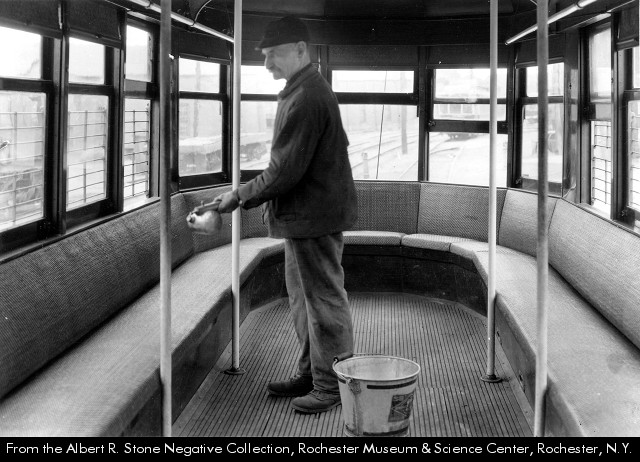
1918 Disinfecting a street car

Disinfecting a Street Car 1918

NYC passed an amendment that any landlords failing to provide heat to tenants during the epidemic will be sent to prison.

Washington urged states to suspend surgeries and to create temporary hospitals for the care of the afflicted.

It was noted that “the army and navy are fighting and conquering Germans. We must fight and conquer germs without taking anything away from the army and navy.”

Hot Lemonade was being touted on Page 1 as being good for influenza.

In Rochester, the Red Cross needed more volunteers.  They noted that “One can hardly visualize the amount of work that must be done in some places visited by a relief worker. When the worker is sent away on a case he or she is supplied with a uniform and a mask. The workers go into some stranger places. Often the first thing they must do is clean up. In some cases the patient is alone, and the relief worker finds that he must cook and companion.” Are restaurants were providing soup and broth.

There was a street car strike in Buffalo. It was noted that police officers in Buffalo were wearing masks. In Rochester, street car use was down. There was a slight change in service in the early morning and evening. It was noted that all cars were
thoroughly fumigated” before they left the storage barns.

There were now 6,138 cases in the City. Thirteen more deaths were reported on Sunday. This brought the total to 112 deaths from influenza and 34 from lobar pneumonia and 23 from bronchial pneumonia.

The Baden Street Settlement Hospital opened at Noon and by night ten patients had been received. There were 15 patients at the newly opened hospital at the YWCA.

It was reported that it was not uncommon for several or all members of a family to be found sick with influenza.

1918-10-21 Deaths in Rochester Democrat_and_Chronicle_Mon__Oct_21__1918_


© words by Dan DeMarle 5/2/2020


October 20th, 1918 Rochester and the Influenza pandemic

In NY City, there was an estimated half a million cases with high mortality.

In NY The State Commissioner of Health gave a clear explanation of the influenza virus and described that how individuals reacted could either extend the illness in the State or shorten it.  Mask wearing and handwashing were keys to fighting the disease.  In addition kissing and even handshaking were recommended to be avoided and what we now call social distancing was encouraged. Taking temperature was one of the best ways to determine whether an individual had a common cold or had influenza.

The essential aspects of the epidemic were laid out to be:

  1. Early detection
  2. Immediate isolation of the patient
  3. The general adoption of mask-wearing
  4. What we now refer to as Social distancing
  5. Washing of hands and belongings.

A possible vaccine for the disease was being tested and touted.

The Red Cross was in need of women and men.  It was noted that “Very many of the influenza patients are delirious and require more strength to restrain them than young and inexperienced volunteer nurses have. For this reason, men who have leisure, either day or night, are earnestly requested to come forward and help.”

It was noted that it was a necessity to regularly clean telephone mouthpieces.

The acting Rochester health commissioner was developing a campaign to discourage the returning of merchandise after a shopper tried to return just bought underwear that was too large for her two children who both had influenza.  This was already banned in Buffalo.

The National Casket Company was ordered to increase its production of plainer caskets to meet the increased needs due to the influenza pandemic.

In Rochester, the new hospital in the YMCA was open and operating and this was for women. A new hospital at the Baden Street Settlement was to open the next day and that would be for men.

There were 705 additional cases during the day bringing the City total to 5,500. It was noted that this was likely an undercount of several hundred as not all Doctors were reporting these numbers.  There were three influenza deaths and two pneumonia deaths. The youngest was Marie Berts aged 4.  There were a total of 156 deaths from influenza and pneumonia and 103 from influenza.

© words by Dan DeMarle 4/30/2020


October 19th, 1918 Rochester and the Influenza pandemic

On the National front influenza was increasing in most parts of the United States. Mobile hospitals were set up in D&C to take on the overflow from public and private hospitals.  There were now calls for male nurses. There were concerns about profiteering on funerals by undertakers. There were calls for schools to close across the country.

In Rochester, the YWCA offered its facility to become a hospital to help treat the ill. It was expected that it would be open in a week.

18 people died from influenza and 5 more died from Pneumonia. There 665 additional cases reported leading to a total of 4,804 cases in the City. The youngest victim as Mary Ridikus age 3. The health director felt the cases would get worse before getting better.

Schools, Churches, Saloons, and Theaters were not going to reopen on Monday and were closed with no date to reopen.

The Executive Committee of the Ministerial Association of Rochester and Vicinity recommended that people of faith used the time they would have been in church to use that time in prayer.

The Red Cross Canteen and the Motor Corps were supplying food to sufferers from influenza who were unable to obtain food. “Leading hotels of the city, working in connection with the kitchen of the Mechanics Institute, are supplying the canteen workers and Motor Corps girls with nourishing broths and substantial dishes, which are carried to needy sufferers.”

© words by Daniel DeMarle 4/29/2020

October 18th, 1918 Rochester and the Influenza pandemic

In Rochester, there were 11 more deaths and three deaths from pneumonia induced by influenza.  To date, 80 persons had died in October. There were 806 new cases of influenza bringing the total to 4,139 cases.  Unlike COVID-19, influenza killed the young and the old. The youngest death reported of the 11 was 7-year-old Mary McBride.

The Commissioner of Public Safety announced an indefinite extension to the closing order that was to end on October 21st.

There was a drastic need for workers, as many individuals were not seeking employment and were instead sheltering in place.

Dr. Roby, the acting City Health Officer included in his treatment recommendations “Take a hot drink of lemonade, with one tablespoonful of whiskey…”

A 5-year-old and two adults collapsed and died suddenly.  Only one made it to the hospital, where he died shortly thereafter.  Bobby Chinch, who was well known to the staff at St. Mary’s Hospital died. He was 110 years old.

Rochester city school principals, both male, and female, were picking apples in nearby farms to save the apple crop.  High School boys were also picking apples.   Before schools were closed high school girls had been sewing bandages and supplied for the troops as part of the Schoolwork at School.

© words by Dan DeMarle 4/29/2020


October 17th, 1918 Rochester and the Influenza pandemic

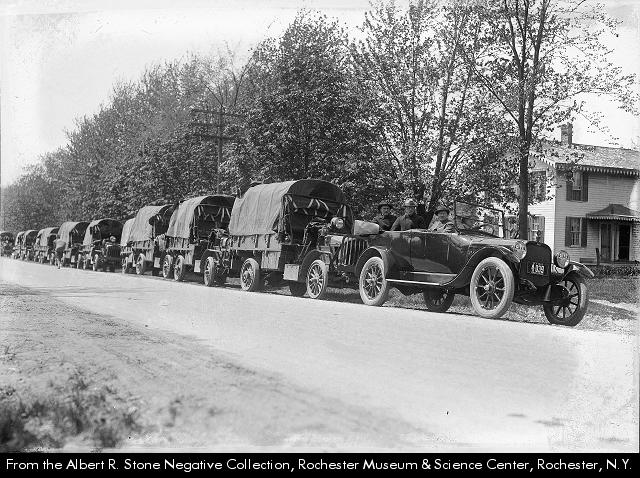
1918 Caravan of red cross supplies

A caravan of red cross trucks delivery food and supplies to ill families

In Rochester, there were 3,333 cases and the death rate was almost double from a year before. There were eight more deaths including individuals who lived on Rugby, Epworth, and Jefferson.

Because Rochester saloons were closed, people were running to the saloons in the surrounding towns and villages where those establishments were still open.

More nurses were needed, so the Red Cross was now looking for men to help out.  IT was found that when nurses went to visit the sick that the nurses or others “find whole families prostrated with nothing in the house to eat. In other cases the only persons in the family who can cook are ill and others have to make out as well as they can.” As such an emergency food corps was formed yesterday noon to cook foods and make broths to deliver to these families.  Families, except those in extreme poverty, were expected to pay a reasonable price for this food.

© words by Dan DeMarle 4/28/2020

October 16th, 1918 Rochester and the Influenza pandemic

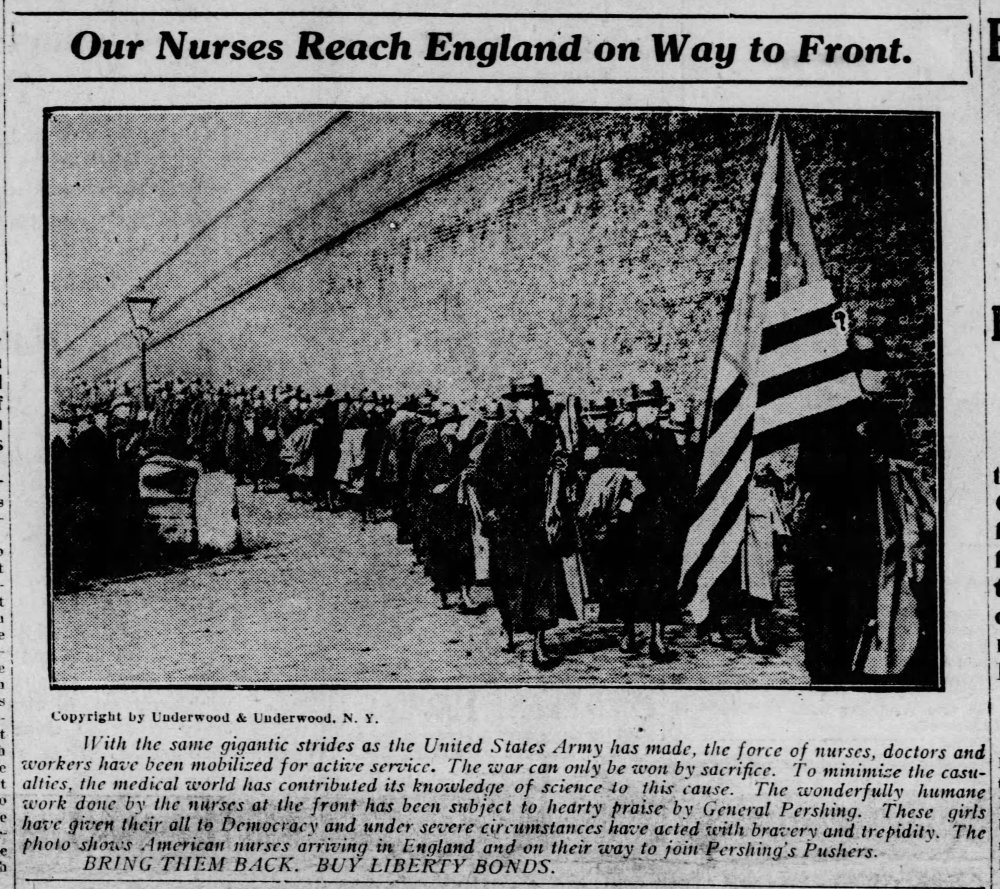
The War continued abroad and across the country, the influenza pandemic was now in every State. While most movies portray young men serving, there were also many, many women who served.

1918-10-16 Nurses reach England Democrat_and_Chronicle_Wed__Oct_16__1918_More than 1,476 U.S. Navy nurses (American military nurses were all women then) served in military hospitals stateside and overseas. Over 400 U.S. military nurses died in service, almost all from the Spanish flu epidemic which swept through crowded military camps, hospitals, and ports of embarkation.[3][4]

The first American women enlisted into the regular armed forces were 13,000 women admitted into active duty in the U.S. Navy. They served stateside in jobs and received the same benefits and responsibilities as men, including identical pay (US$28.75 per month), and were treated as veterans after the war.

In Rochester, there were 442 new cases, making a total of 2,684 cases. That, however, was only with one-half of City physicians providing the data. There were 21 deaths the day before.

1918-10-16 Epidemic in all States Democrat_and_Chronicle_Wed__Oct_16__1918_

© words by Daniel DeMarle 4/28/2020

October 15th, 1918 Rochester and the Influenza pandemic

President Wilson turned down the peace request from Germany.   4,217 new cases were reported in NY.  Deaths totaled 222-235 in 24 hours, this was compared to 168 the day before. Policemen in NY were ordered to wear gauze masks (that their wives were to make) while sleeping in the barracks.

The federal government was mobilizing for a national campaign against the pandemic.

Rochester was hit by fake news that almost caused a riot. This occurred when a fake newspaper was printed and distributed as a way to increase the sale of Liberty Loans.  It did not go over well.

In Rochester the sale of any liquor, wine, beer, ale, mineral water, or soft drinks to be drunk on the premises as a way to stop the selling of drinks with meals.

Students in the Training Corps at the University of Rochester were now quarantined.

The number of cases in Rochester was 2,242.  There were 12 more deaths the day before.

Directions were given for the care of the sick, on how to make masques, and how to wash your hands.

With Schools in Rochester closed, the Superintendent and Principals went “back to the farm” where they picked apples on an apple farm.

Teachers pick apples

Image A group of school principals help with apple picking while school is closed because of the influenza epidemic. Click here for link.

© words by Dan DeMarle 4/16/2020


October 14th, 1918 Rochester and the Influenza pandemic

The World War continued. After declining for three days the mortality advanced in Rochester with nine more deaths making a total of 31 to date in October.  Influenza cases were not expected to let up for two to three weeks.  Seven Coast Guard service members from the Rochester Coast Guard Station were ill.

Not only was America fighting a war, and a pandemic, but it was also flu season.  Across the nation, there were 168 deaths for influenza, but there were also 216 deaths from the flu.  This is why there is a concern that if COVID-19 comes back or is still here in the fall that we will have both illnesses going on at once.

© words by Dan DeMarle 4/25/2020

Dora Sigerson 8/16/1866 – 1/6/1918

Dora Sigerson

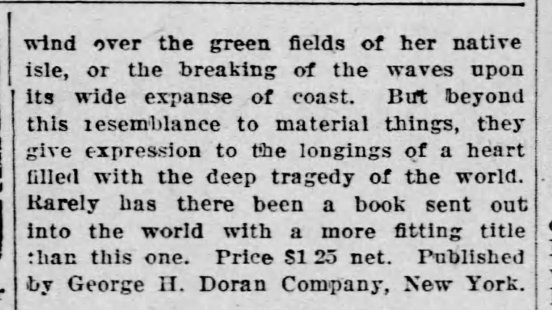
Reading about the 1918 Flu Pandemic in Rochester in the paper on 10/13/1918, I come across a book review for the work of Dara Sigerson who was described as one the real poets of Ireland.  She had died in 1/1918 in Ireland. Before her death, she had gathered some of her poetry together for publication.  The poems of the book covered the time around the Great War (World War I).  Then I found myself finding the book in Google Books, and then wandering Ireland during the Great War.

A selection from “The Road of the Refugees”

“..Hear the lost feet straying, from the roadway slipping.     They will walk no longer in this march appalling
Hear the sound of rain dripping, dripping, dripping,
Is it rain or tears? What, O God, is falling?”
For more information about her life click here.

1918-10-13 Dars Sigerson Democrat_and_Chronicle_Sun__Oct_13__1918_a1918-10-13 Dars Sigerson Democrat_and_Chronicle_Sun__Oct_13__1918_b